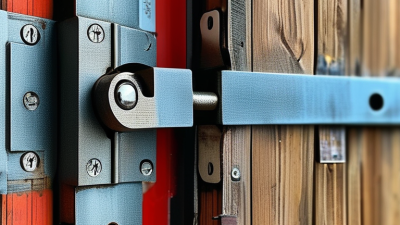
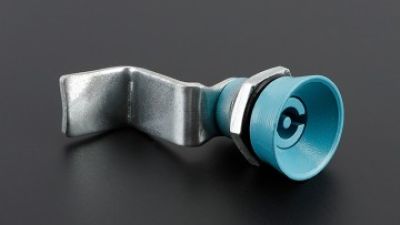
Picking out a Rotary Latch Lock in 2026 isn’t just about going for the strongest spring or the cheapest option. Honestly, the right choice really depends on a few things—like how heavy the door is, how much it vibrates, how tight a seal you need, how often the latch gets used, and how much space you’ve got to work with. For example, a latch on a tiny medical cabinet has totally different demands compared to one on an off-road vehicle. Small details make a big difference here, and it’s worth paying attention to them.
Market analysts like Grand View Research are predicting that the global automotive door latch market will keep growing through 2030, thanks to moving toward electric vehicles, stricter safety standards, and smarter access systems. Meanwhile, Allied Market Research also sees long-term growth in this area—that said, different reports might give slightly different numbers because they define the market a bit differently. And honestly? While numbers are helpful, they don’t replace actually testing things out in real-world conditions.
John E. McCoy, an application engineer at Southco, hits the nail on the head when he says, “A latch must be considered as part of the whole system, not just as an isolated piece.” That’s a practical way to look at it. Before making a decision, you really should compare things like the shape of the rotary mechanism, how well the striker lines up, resistance to corrosion, how much force it takes to open or close, and how many cycles it can handle without failing. Industry standards like EN 12209 and automotive validation practices can help guide your evaluation, but they don’t always cover every specific application or enclosure. So, testing the actual panel or door you're working with is absolutely essential. Don’t skip that step—test it always.
A good Rotary Latch Lock should open and close smoothly, resist accidental releases, and still work perfectly after lots of use. Oh, and don’t forget to look into factors like noise levels, cable routing, emergency access options, and how well the latch handles tolerance variations. The truth is, the perfect latch probably doesn’t exist—what you’ll find is a well-documented compromise. This guide is here to help you compare different suppliers, understand the specs, and weigh the overall installation risks in 2026. Just remember, it's all about finding the right balance for your specific needs.
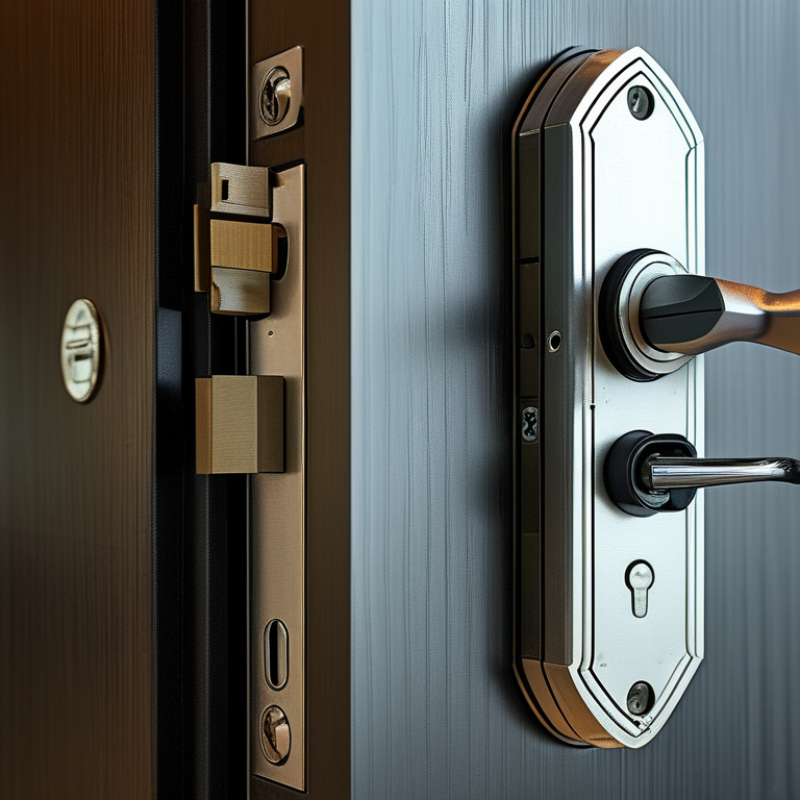
A Rotary Latch is a mechanical closure that grips a striker with a rotating claw. Turning the handle or actuator releases that claw. Unlike a simple spring latch, it can hold a door firmly against vibration, dust, and repeated movement. You may find it inside vehicle doors, tool cabinets, machine covers, and equipment enclosures.
The mechanism is straightforward. A striker enters the latch opening, then rotates the claw into a safety position. A spring returns the release lever after opening. During selection, check the latch load rating, mounting space, striker alignment, and release direction. A few millimeters of misalignment can create noise or prevent full engagement. I have seen installations fail because the handle moved freely, but the claw never reached its second locking position. That detail is easy to miss.
Market data supports careful selection. Grand View Research’s 2024 automotive locking-system analysis expects the sector to grow at more than 5% annually through the decade. Fortune Business Insights also identifies rising vehicle safety and convenience requirements as major market drivers. These figures do not guarantee a better latch. They show stronger demand for reliable access hardware. For a practical choice, compare cycle-test results, corrosion resistance, operating temperature, and emergency-release access. A compact Rotary Latch may look ideal, yet its cable bend radius can make installation awkward. Test the complete assembly under vibration, not only on a workbench. Mistakes happen there.
A rotary latch lock secures a door or panel by rotating around a striker and holding it in a closed position. When the release mechanism is activated, the rotor turns back and disengages from the striker. The chart compares representative rotary-latch configurations by engagement positions and holding points.
Selection tip: Choose a two-stage latch when secondary retention is important, and consider a dual-rotor or multi-point design for larger doors, vibration-prone equipment, or applications requiring more even load distribution. Always verify the manufacturer’s rated load, material, corrosion resistance, temperature range, and installation alignment before final selection.
Choosing a Rotary Lock starts with the application, not the catalog photograph. A single-rotor latch suits compact doors, toolboxes, and light equipment panels. It gives a clean closing action when the striker stays accurately aligned. For wider doors or vibration-prone frames, a double-rotor design spreads holding forces more evenly. That difference matters on a service vehicle door bouncing over rough ground. Small detail, large effect.
Compression rotary latches fit enclosures that need gasket pressure against dust or water. Use them on electrical cabinets, outdoor control boxes, and refrigerated equipment. A slam latch helps operators close a panel quickly, even while wearing gloves. However, slam action can hide poor alignment until the mechanism wears. Measure the striker path, panel thickness, and available rear clearance before ordering. Do not guess. For frequent access, an electric or remote-release version may reduce manual effort, but it adds wiring, failure points, and maintenance.
Material selection should follow the environment. Zinc-plated steel may suit dry interiors, while stainless steel is safer near salt spray or cleaning chemicals. Inspect latch cycling under realistic load, not only on an empty bench. Check the two-stage position and confirm the door remains captured after the first click. Field installers often find that mounting errors look like latch defects. A slightly twisted frame can create drag. A perfect fit is rare. Leave adjustment space around the striker; real frames rarely stay perfect.
Selecting a rotary latch starts with the real load, not the advertised maximum. Measure the door, panel, hinge position, and closing force. Include vibration, shock, repeated cycling, and accidental impact. A latch holding 100 kilograms statically may fail under sudden movement. Leave a practical safety margin. Bigger is not always better.
I have seen installations fail because engineers measured only the panel weight. A service door may also carry seals, wiring, tools, or snow. Record the normal load, peak load, and cycle frequency. Then compare those figures with verified test data. Check the latch body, striker, mounting bolts, and surrounding material. The weakest part controls the result. My first estimate is rarely perfect. Test a sample with the actual hinges and alignment.
Security level depends on more than holding force. For basic access, choose reliable retention and easy release. For higher security, examine anti-tamper geometry, protected release paths, resistance to prying, and controlled access hardware. Rotary Handles should match the latch mechanism and remain usable with gloves or poor lighting. Weather, dust, and corrosion can reduce performance quickly. Ask for cycle testing, temperature limits, and maintenance requirements. A secure latch should resist unwanted opening without becoming difficult to inspect or service. Small details matter.
How to Choose a Rotary Latch Lock in 2026?
Choosing a rotary latch lock starts with material, size, and finish. Stainless steel suits damp compartments, outdoor panels, and washdown areas. Zinc-plated steel can work well in dry interiors. For frequent use, check the latch cycle rating, not only its appearance. A small latch may look neat but fail under vibration or repeated impact. Measure the panel thickness, mounting-hole spacing, striker position, and available clearance before ordering. Leave enough room for the cable or rod to bend smoothly. I once selected a compact latch for a crowded enclosure. It fitted, but access became frustrating. That choice was not perfect.
Tips: Match the latch to the load. Test the actual panel. Hold a cardboard template against the installation area. It reveals interference quickly. Choose a finish that supports the environment, not merely your preferred color. A powder-coated surface can improve appearance, while passivation may suit stainless steel applications. Inspect edges, fasteners, and drainage paths during installation. Water trapped near the mechanism can shorten service life.
For a Latch And Latch arrangement, confirm that both points engage evenly. Unequal alignment can twist the door and increase release force. Select the correct size from the manufacturer’s dimensional drawing, then verify it with a physical sample when possible. Consider gloves, maintenance access, and emergency release needs. Experienced installers also check whether the striker enters the rotary mechanism centrally. Small alignment errors matter. Recheck them after tightening.
How to Select the Right Material, Size, and Finish
| Selection Dimension | Common Options | Typical Characteristics | Recommended Use | Key Check Before Ordering |
|---|---|---|---|---|
| Latch Body Material | Zinc die-cast alloy | Lightweight, suitable for general indoor equipment, and usually easy to finish. It offers good dimensional consistency but is less suitable for severe outdoor exposure unless properly protected. | Electrical cabinets, machine guards, access panels, and indoor enclosures. | Confirm the required corrosion resistance, operating temperature, and structural load. |
| Latch Body Material | Carbon steel | High strength and stiffness with good value. Bare carbon steel can rust, so a protective coating or plating is normally required. | Industrial machinery, vehicle compartments, and applications requiring a rigid latch body. | Check coating thickness, salt-spray requirements, and whether the latch will be exposed to water or chemicals. |
| Latch Body Material | Stainless steel 304 | Good general corrosion resistance and suitable for many indoor and outdoor applications. It is commonly selected where appearance and durability are important. | Outdoor enclosures, food-processing support areas, marine-adjacent equipment, and clean industrial environments. | Verify compatibility with chlorides, cleaning chemicals, and the specified stainless-steel grade. |
| Latch Body Material | Stainless steel 316 | Improved resistance to chlorides and marine atmospheres compared with 304 stainless steel. It generally costs more. | Coastal equipment, marine environments, chemical-processing areas, and frequent washdown locations. | Confirm that all exposed components, including the cam, fasteners, and spring, provide comparable corrosion resistance. |
| Operating Load | Light-duty: up to approximately 500 N holding force | Suitable for keeping a panel or door closed when vibration and impact are limited. The actual rating depends on latch geometry, mounting, and striker engagement. | Small access panels, instrument covers, and light equipment doors. | Use the manufacturer's tested static and dynamic ratings; do not size the latch from holding force alone. |
| Operating Load | Medium-duty: approximately 500–2,000 N holding force | Provides greater resistance to vibration and moderate door movement. Correct alignment is essential for reliable release and locking. | Machine doors, industrial cabinets, generators, and equipment enclosures. | Include vibration, shock, gasket compression, door weight, and safety factors in the calculation. |
| Operating Load | Heavy-duty: above approximately 2,000 N holding force | Designed for larger or more demanding doors, but the complete mounting structure must carry the load. A rotary latch is not automatically a safety-rated lock. | Large machinery doors, transport equipment, and heavy access covers. | Confirm the certified load rating, striker strength, mounting fasteners, and any required secondary safety catch. |
| Overall Latch Size | Compact: approximately 50–75 mm body length | Minimizes space use and is easier to install in narrow panels. Compact models typically have less room for large cable pulls or high-load mechanisms. | Small cabinets, electronics housings, and compact access panels. | Measure the available envelope, mounting-hole pattern, cam rotation, and cable or handle clearance. |
| Overall Latch Size | Standard: approximately 75–120 mm body length | Offers a practical balance between installation space, operating leverage, and available configuration options. | General industrial doors, control cabinets, and medium-size equipment covers. | Match the latch centerline to the striker position and confirm the panel cutout dimensions. |
| Overall Latch Size | Large: above approximately 120 mm body length | Provides more room for robust mechanisms and multi-point actuation, but requires more installation space and stronger door construction. | Large machinery doors, vehicle bodies, and wide equipment access panels. | Check door deflection, mounting reinforcement, handle torque, and the number of locking points. |
| Panel Thickness | Thin panel: approximately 0.8–1.5 mm | Often requires a backing plate, rivet nuts, or reinforced mounting area to prevent deformation during operation. | Sheet-metal cabinets and lightweight equipment covers. | Confirm the supported panel range and use a reinforcement where the latch load is concentrated. |
| Panel Thickness | Medium panel: approximately 1.5–3.0 mm | Works with many standard rotary latch installations when the cutout and fastener access are correct. | Industrial enclosures, machine guards, and general-purpose access doors. | Verify the latch flange, threaded fastener length, gasket compression, and door-to-frame alignment. |
| Panel Thickness | Thick panel: above 3.0 mm | May require a longer spindle, extended mounting hardware, or a recessed installation to maintain proper engagement. | Structural doors, thick composite panels, and reinforced machine enclosures. | Confirm spindle length, cam reach, striker clearance, and the complete installed stack-up. |
| Finish | Bright or black zinc plating | Provides basic corrosion protection and a uniform appearance. Performance depends on plating type, thickness, and edge coverage. | Indoor equipment and protected industrial environments. | Request the applicable corrosion test requirement and verify whether the finish is compatible with the environment. |
| Finish | Black powder coating | Creates a durable decorative layer with good abrasion resistance when properly applied. Damage to the coating can expose the underlying metal. | Machine guards, cabinets, vehicle equipment, and applications requiring a non-reflective finish. | Check coating thickness, edge coverage, UV exposure, and the required color standard. |
| Finish | Passivated stainless steel | Maintains the natural stainless appearance and supports corrosion resistance by removing free iron from the surface. | Clean industrial areas, outdoor equipment, washdown applications, and visible hardware. | Specify the stainless grade, surface roughness, passivation process, and cleaning chemicals. |
| Environmental Protection | Indoor, dry environment | Offers the widest choice of materials and finishes because moisture and contamination are limited. | Office equipment, indoor cabinets, and climate-controlled machinery. | Prioritize fit, cycle life, operating torque, and serviceability. |
| Environmental Protection | Outdoor or high-humidity environment | Requires improved corrosion protection, sealed interfaces where applicable, and materials that tolerate temperature and moisture changes. | Outdoor cabinets, agricultural machinery, and exposed industrial equipment. | Check ingress protection requirements, drainage, UV resistance, and low-temperature performance. |
| Environmental Protection | Marine, coastal, or chemical exposure | Chlorides and chemicals can accelerate corrosion and cause galvanic interaction between dissimilar metals. | Marine equipment, coastal installations, and chemical-processing support equipment. | Consider 316 stainless steel, compatible fasteners, isolation washers, and a documented corrosion test. |
| Actuation Method | Key, quarter-turn insert, or handle | Provides local manual access. The chosen actuator affects security, operating torque, available space, and user access. | General access panels and enclosures requiring occasional manual operation. | Confirm keying or access requirements, rotation angle, handle clearance, and emergency release needs. |
| Actuation Method | Cable or rod remote actuation | Allows the latch to be released from a separate handle or control point. Cable routing and bend radius directly affect reliability. | Vehicle compartments, guarded machinery, and doors where the latch is not directly accessible. | Check cable length, minimum bend radius, release force, routing protection, and adjustment range. |
| Installation Accuracy | Standard single-point installation | Simple installation with one latch and one striker. It is suitable when the door is small and does not twist significantly. | Small and medium access doors with controlled alignment. | Maintain the specified striker engagement and ensure the door does not preload the latch during closing. |
| Installation Accuracy | Multi-point installation | Uses rods, cables, or additional latches to distribute holding force across a larger door and reduce edge movement. | Wide doors, flexible panels, and large machine enclosures. | Synchronize all locking points and allow adjustment for door sag, thermal expansion, and gasket compression. |
Selection note: The force ranges and dimensions above are practical screening guidelines, not universal ratings. Final selection should be based on the specific latch's tested holding force, cycle-life data, temperature range, corrosion requirements, mounting configuration, and applicable safety standards.
Choosing a rotary latch in 2026 starts with the installation space, not the catalog photograph. Measure panel thickness, hole spacing, keeper alignment, and handle travel before ordering. A few millimeters can create binding. Check whether the latch uses bolts, studs, or concealed fasteners. Service access matters when gloves, dust, or poor lighting slow a repair. Grand View Research’s 2024 report indicates continued growth in automotive locking systems, supported by safety and convenience demands. That growth does not make every latch suitable.
For operation, inspect the rated load, cycle life, actuation force, and allowable misalignment. Ask for test conditions. Cycle figures can look impressive but may exclude vibration, dirt, or temperature changes.
Verify whether the mechanism supports compression sealing, dual-point rods, or an emergency release. Check the required environmental protection rating, especially for outdoor enclosures. IMARC Group’s automotive locks report projects market growth at about 5.2% annually from 2024 to 2032, increasing pressure for reliable, repeatable hardware.
One omission is easy to make: checking only static strength. Real assemblies flex. A latch that closes smoothly on a workbench may resist operation after installation. I would leave adjustment margin around the keeper and test repeated opening under realistic side loads. For machinery guarding, review the applicable risk assessment and ISO 14120 requirements. Corrosion testing, temperature exposure, and vibration results deserve more attention than polished product photos. Small details decide reliability.
The MS702 electrical panel cam lock is a compact, practical locking solution for control cabinets, distribution boxes, machine enclosures, and other electrical panels. Its cam-operated design provides quick access for authorized maintenance while helping prevent accidental opening or unauthorized handling. Typical features include a keyed mechanism, a rotating cam, a threaded body, and a fastening nut for secure panel mounting. Depending on the selected configuration, the lock may be available with different cam shapes, key options, finish treatments, and mounting dimensions to suit various enclosure designs.
Installation begins by confirming the panel cutout, material thickness, and clearance behind the door. Insert the lock body through the prepared opening, position the cam in the required orientation, and tighten the retaining nut without applying excessive force. After installation, operate the key several times to ensure smooth rotation and verify that the cam fully engages with the cabinet frame. When selecting an MS702 lock, consider the required security level, door sealing needs, operating space, cam reach, key uniformity, and resistance to corrosion or frequent use. Matching these specifications with the enclosure structure helps provide dependable access control and convenient maintenance performance.
: A single-rotor latch usually fits compact doors, toolboxes, and light equipment panels. It needs accurate striker alignment. Measure twice. Do not guess.
Choose a double-rotor design for wider doors or frames exposed to vibration. It spreads holding forces across two points. This helps service doors on rough roads.
Use one when a gasket must press tightly against dust or water. Typical applications include outdoor cabinets, electrical enclosures, and refrigerated equipment. Check the sealing pressure carefully.
A slam latch helps operators close panels quickly, even while wearing gloves. However, it may hide poor alignment until wear appears. Fast closing is not perfect closing.
Measure panel thickness, hole spacing, striker travel, and rear clearance. Also check handle movement and keeper alignment. A few millimeters can cause binding. Leave adjustment space.
Zinc-plated steel may suit dry indoor areas. Stainless steel is usually better near salt spray or cleaning chemicals. Consider temperature, moisture, dirt, and cleaning routines.
Check rated load, cycle life, actuation force, and allowed misalignment. Test the latch under vibration, dirt, temperature changes, and side loads. An empty workbench test proves very little.
It may reduce manual effort on frequently accessed equipment. But wiring adds failure points, service work, and maintenance needs. Manual release is sometimes simpler. Think beyond convenience.
Check the first and second latch positions. The door should remain captured after the first click. A twisted frame can create drag and mimic a faulty latch. Perfect alignment is rare.
Choosing the right Rotary Latch Lock in 2026 requires balancing function, safety, durability, and cost. A rotary latch lock secures a panel, door, or compartment by rotating a latch mechanism around a striker, providing reliable holding force while allowing convenient release through a handle, cable, actuator, or compatible access system. Start by matching the latch type to the application, such as compact designs for limited spaces, adjustable versions for alignment needs, or heavy-duty models for demanding environments. Evaluate the required load, vibration resistance, operating frequency, and desired security level before making a selection.
Material, dimensions, corrosion resistance, surface finish, and environmental exposure should also be considered to ensure a proper fit and long service life. Check installation space, mounting method, alignment tolerance, release direction, and ease of operation. Finally, compare build quality, maintenance requirements, replacement accessibility, and total ownership cost rather than focusing only on the initial price. A well-selected Rotary Latch Lock can improve operational reliability, user safety, and long-term value.