As more homeowners are really starting to prioritize security and making sure their homes are accessible, it’s more important than ever to have reliable, smart locking systems. One that’s been gaining popularity is the "Turn Lock." It’s a pretty clever little mechanism that’s easy to use but still super secure. John Wilson, an expert in home security from Secure Living Innovations, puts it well when he says, "A good Turn Lock not only keeps your home safe but also makes it easy for everyone to get in and out without any fuss. It’s all about finding that sweet spot between safety and convenience."
Nowadays, with how busy life gets, making sure your home is both safe and user-friendly isn’t just a luxury—it’s a must. The Turn Lock system really shines because of its straightforward, intuitive design, which means residents can operate it without any hassle, but still rest assured that their home is protected. This article is all about exploring why adding Turn Locks could be a smart move—showing off different features that suit different lifestyles and needs. Thanks to technology, these kinds of locks have totally changed how we think about home security—making it easier and actually enjoyable to keep your space safe.
As we dig into the ins and outs of Turn Locks, I’ll also share some practical tips to help you pick the right lock for your home. We’ll talk about common worries like safety and making access simple. By understanding these innovative options, homeowners can really step up their security game and create a welcoming, hassle-free environment for family and friends alike.
Understanding Lock Mechanisms: Types and Features
Understanding the various types of lock mechanisms is crucial for
enhancing the security and accessibility of your home. Traditional deadbolts are popular for their simplicity and
reliability, securing doors against forced entry. They often require a key for locking and unlocking, adding an
extra layer of security. On the other hand, smart locks have gained traction,
offering keyless entry options through codes or smartphone apps, making them convenient and accessible while
allowing you to monitor access remotely.
When selecting lock mechanisms, consider features like tamper resistance and
durability. Look for locks that are Grade 1 certified for maximum
security and ensure they come with reinforced strike plates. Additionally, evaluate the ease of installation and
compatibility with your existing door frames.
Tips: Regularly check and maintain your locks. Lubricating them with graphite or silicone spray can prevent
sticking and ensure smooth operation. Additionally, for increased security, install a secondary lock or deadbolt
on less-secure doors, and consider implementing a lockout policy for guests and service personnel to monitor
access effectively.
The Importance of Security and Accessibility in Home Design
In today’s rapidly evolving home design landscape, the importance of security and accessibility cannot be overstated. According to the American Association of Retired Persons (AARP), nearly 90% of older adults wish to stay in their own homes as they age, making it essential for home designs to prioritize both ease of access and security features. Safety is a primary concern; reports suggest that homes with advanced security measures experience up to 50% fewer break-ins compared to those without. This significant reduction in risk underscores the necessity of incorporating reliable locking mechanisms, including smart locks and deadbolts, into living spaces.
Furthermore, accessibility in home design is vital not only for the elderly but also for individuals with disabilities. The CDC reports that approximately 26% of adults in the U.S. live with a disability that affects their daily activities. Incorporating universal design principles—such as wider doorways, lever handles instead of knobs, and secure yet easy-to-use lock systems—can greatly enhance the usability of a home. A well-designed space that meets these needs not only improves the quality of life for its residents but also increases property value, as modern buyers are frequently looking for homes that offer both security and accessibility features. As we continue to develop our living spaces, it is essential to prioritize these elements for a safe and inclusive environment.
Assessing Your Current Lock System for Weaknesses
When considering the security of your home, the first step is to thoroughly assess your current lock system for any potential weaknesses. Begin by examining all entry points, including doors and windows, to identify the types of locks in use.
Look for outdated or damaged locks, as these can serve as easy targets for intruders. It's essential to evaluate whether the locks are properly installed and functioning as intended, since even well-made locks can be ineffective if they are not fitted correctly.
Next, consider the environment surrounding your home. Shadows, overgrown bushes, and poor lighting can create opportunities for unauthorized access. Make sure that your locks are complemented by sufficient security measures, such as sturdy deadbolts or smart locking systems.
Additionally, assess the frequency with which you change your locks. If you’ve experienced changes in your living situation, like new roommates or neighbors, it may be prudent to replace your locks altogether to ensure that you maintain control over who has access to your home.
By systematically evaluating these factors, you can make informed decisions to enhance your overall security.
Upgrading to Smart Locks: Benefits and Considerations
Upgrading to smart locks can significantly enhance both security and accessibility in your home.
One of the primary benefits of smart locks is their ability to provide keyless entry, which eliminates the risks associated with lost or stolen keys. With options to unlock doors via smartphones, keypads, or biometrics, homeowners can enjoy a more convenient access method. Additionally, many smart locks come equipped with monitoring features that allow users to receive notifications when someone enters or exits the home, providing peace of mind and better control over who has access to different areas.
When considering the transition to smart locks, it is essential to evaluate factors such as compatibility with existing door hardware and the types of connectivity options available. Some smart locks require Wi-Fi to function optimally, while others rely on Bluetooth or Zigbee networks. It's also crucial to assess the lock's battery life and backup options in case of power failure. Lastly, researching the security features of each product, including encryption methods and resistance to hacking, will ensure that you choose a smart lock that meets your security needs while offering the convenience of modern technology.
Implementing Keyless Entry for Enhanced Accessibility
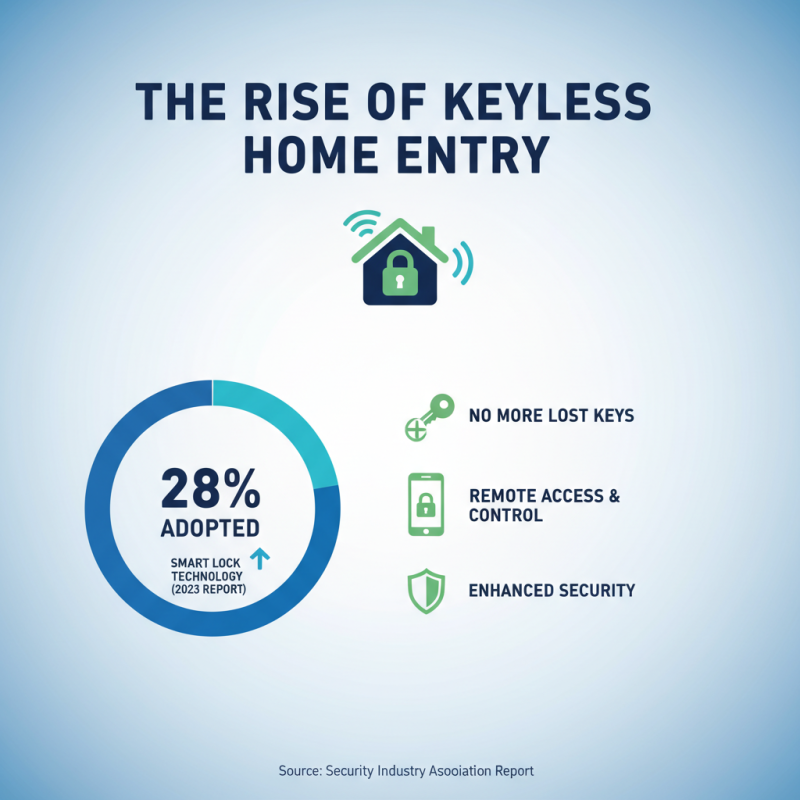
The integration of keyless entry systems in homes has become increasingly popular due to their convenience and enhanced security features. According to a recent report by the Security Industry Association, around 28% of consumers have already adopted smart lock technology, a trend that is expected to rise as more homeowners seek seamless access solutions. Keyless entry not only eliminates the need for traditional keys but also provides users with the ability to control access remotely, making it ideal for families and busy professionals.
When implementing keyless entry, it’s important to consider a few tips to ensure optimal functionality and security. First, choose a lock system that offers two-factor authentication, which adds an extra layer of security. This could involve pairing your smartphone with a fingerprint scanner or requiring a numerical code in addition to a mobile app. Secondly, regularly update access codes or passwords, especially if you have temporary visitors like house sitters or contractors. This practice helps maintain control over who can enter your home while enhancing overall security.
In terms of accessibility, keyless entry systems can significantly benefit individuals with mobility challenges. A smartphone app can replace physical keys, allowing users to unlock doors without fumbling for keys or dealing with traditional locks. Additionally, voice-activated systems are becoming more prevalent, catering to those who may find it difficult to use their hands. By embracing these technologies, homeowners can create a safer and more accessible living environment for everyone.
Maintaining Your Locks: Best Practices for Longevity
Maintaining your locks is essential for ensuring both security and accessibility in your home. Over time, locks can become less effective due to wear and tear, making it crucial to establish a routine for their upkeep. Regularly inspecting your locks for any signs of damage, such as rust or misalignment, can help identify potential issues before they escalate. Cleaning your locks with appropriate materials, like a soft cloth and a suitable lubricant, can prevent dirt buildup and keep the mechanism functioning smoothly.
Tips for extending the life of your locks include applying graphite powder to the keyhole and internal components to minimize friction, which can help prevent sticking. Additionally, consider rekeying locks instead of replacing them whenever access needs change. This not only saves costs but also ensures that older keys no longer function, providing an extra layer of security. During seasonal changes, check the weather stripping around doors and windows to ensure locks align correctly and aren’t exposed to harsh elements that could lead to deterioration.
Utilizing smart technology as part of your locking system can provide enhanced functionality while also simplifying maintenance needs. Many smart locks come with features that alert you when battery replacement is necessary or when the mechanism requires attention, making it easier to stay ahead of potential issues. By adopting consistent care practices, you can ensure that your locks remain secure and reliable for years to come.
Integrating Home Security with Smart Home Technology
Integrating smart home technology into your home security system not only enhances your safety but also improves accessibility for all family members. According to a recent report by the Security Industry Association, homes equipped with smart security systems experience a significant reduction in break-in rates, often reporting decreases of up to 30%. These technologies allow homeowners to monitor their properties remotely, receiving real-time alerts and providing a level of convenience that traditional systems cannot match.
One of the key benefits of smart home integration is the ability to manage multiple devices from a single platform. Home automation systems can coordinate locks, alarms, and cameras, enabling seamless communication among them. For instance, when a smart lock is engaged, your alarm system can automatically arm, ensuring comprehensive security. Furthermore, these integrations often include features that improve accessibility, such as remote locking mechanisms that assist individuals with mobility challenges.
Tips:
1. Consider installing smart locks that offer keyless entry; they provide enhanced security while allowing family members to access the home without traditional keys.
2. Ensure your home automation system is compatible with voice-controlled devices for an easy hands-free experience, making it simpler for everyone to manage security features.
3. Regularly update the firmware on your smart devices to protect against security vulnerabilities, keeping your home safe from potential cyber threats.
The Essential Guide to Choosing the Right Electrical Board Cam Lock: MS816-1 Product Overview and Benefits
When it comes to selecting the right electrical board cam lock, understanding the specific features and advantages of the MS816-1 model is crucial. This innovative product is designed to provide enhanced security and ease of access for various electrical applications. Its robust construction ensures durability and reliability, making it an ideal choice for both commercial and residential settings. The MS816-1 cam lock is engineered to withstand harsh environmental conditions, ensuring long-lasting performance that users can rely on.
Additionally, the MS816-1 offers a user-friendly installation process, which can save time and reduce labor costs. This feature is particularly appealing for contractors and DIY enthusiasts alike, as it allows for quick setup without compromising on security. Its versatility is also a significant advantage, as it can accommodate various door styles and thicknesses, making it a suitable option for a wide range of applications. Overall, the MS816-1 stands out for its combination of security, ease of use, and adaptability, making it an excellent choice for anyone in need of a reliable cam lock solution.
FAQS
: Smart locks enhance security and accessibility by providing keyless entry, allowing users to unlock doors via smartphones, keypads, or biometrics, and offering monitoring features that notify homeowners of entry and exit events.
Smart locks reduce the risks associated with lost or stolen keys and often include advanced security features such as encryption methods and resistance to hacking, providing enhanced protection for homes.
Consider compatibility with existing door hardware, connectivity options (Wi-Fi, Bluetooth, Zigbee), battery life, backup options in case of power failure, and the lock's security features.
Keyless entry allows individuals, especially those with mobility challenges, to unlock doors without physical keys, using alternatives like smartphone apps or voice-activated systems for ease of access.
Choose a lock system that offers two-factor authentication, regularly update access codes or passwords, and control access for temporary visitors to maintain security.
Smart home technology allows for the management of multiple devices from a single platform, coordinating locks, alarms, and cameras, enhancing both security and convenience for homeowners.
Regularly update the firmware on your smart devices to protect against security vulnerabilities, providing ongoing safety from potential cyber threats.
Smart locks eliminate the need for traditional keys, allowing remote access control which is particularly beneficial for families and individuals with hectic schedules who require convenient home entry solutions.
Homes equipped with smart security systems often experience a significant reduction in break-in rates, with reports indicating decreases of up to 30% compared to traditional systems.
Conclusion
In "How to Turn Lock Mechanisms for Better Security and Accessibility in Your Home," the article explores various aspects of lock systems and their impact on home safety and usability. It begins with an overview of different lock mechanisms, highlighting their unique features and functionalities. The importance of balancing security with accessibility within home design is emphasized, encouraging homeowners to assess their current lock systems for vulnerabilities.
The article suggests upgrading to smart locks, detailing the benefits such as remote control and monitoring capabilities, while also considering keyless entry solutions for improved accessibility. It underscores the necessity of maintaining locks through best practices, ensuring their longevity and efficiency. Finally, the integration of home security with smart home technology is discussed, allowing for a cohesive security strategy that enhances overall home protection. By focusing on how to effectively turn lock mechanisms, homeowners can significantly enhance both security and access in their living spaces.

 Rod lock