Hey, in today’s fast-changing world of manufacturing, really understanding the difference between ODM and OEM suppliers is pretty important. One big name you might wanna keep an eye on is the Latch Snap industry. So, I came across a recent report from Technavio, and it estimates that the market for Latch Snap parts is actually gonna grow around 5% each year over the next five years. That kinda shows how much folks are looking for reliable fastening solutions these days, especially in areas like automotive and electronics.
Dr. Emily Chen, who’s pretty much an industry guru, mentioned, “The way Latch Snap designs are evolving really impacts how efficiently they can be used.” I think that’s a good reminder of how important it is to stay flexible and keep up with what the market needs. But, of course, all this growth isn’t without its headaches. Companies are gonna have to juggle between keeping quality high and keeping costs down, all while trying to meet the different demands of OEMs and ODMs. And with all the moving parts in supply chains these days, it’s easy for expectations to get out of sync. That’s why being transparent and open about processes is becoming more and more critical.
As suppliers work through these challenges, the Latch Snap side of things really needs to get better at smoothening out their processes. By focusing on smarter designs and more efficient production, everyone involved can hopefully do a better job serving their clients. Still, with all these advancements, there’s definitely a responsibility that comes with it. Taking a step back to really consider these hurdles is key if the industry wants to keep growing and innovating in the Latch Snap world.

In manufacturing, ODM and OEM are crucial concepts. ODM stands for Original Design Manufacturer. These companies design and produce products based on their own specifications. OEM, on the other hand, stands for Original Equipment Manufacturer. These suppliers create products based on another company's design. Reports indicate that over 70% of manufacturing in various sectors involves ODM or OEM partnerships.
ODM and OEM serve distinct roles. ODMs often target innovative designs. Their clients rely on them to enhance product features like durability and aesthetics. Data shows that products designed through ODM partnerships increase market responsiveness by 30%. OEMs focus more on production efficiency. They help brands save costs while maintaining quality. For instance, those using Snap In Lock mechanisms benefit from simplified assembly and reduced labor costs.
Challenges exist in both models. Companies may face communication issues. Misunderstandings can occur regarding design specifications or quality standards. The inability to align visions can impede progress. This highlights the need for clear contracts and collaboration. Manufacturers must reflect on their strategies and partnerships to maximize these relationships effectively.
| Dimension | Description | Example |
|---|---|---|
| ODM | Original Design Manufacturer; a company that designs and manufactures a product as per another company's specifications. | Custom electronics designed for a specific client. |
| OEM | Original Equipment Manufacturer; a company that sells products that may be rebranded by another company. | Computers produced under a different brand name. |
| Latch | A fastening device that secures a door or gate. | Gate latch used in outdoor fencing. |
| Snap | A mechanism that closes securely, often used in clothing and accessories. | Snaps used on jackets and bags. |
| Supplier | An entity that provides products or services to another entity or organization. | Manufacturer supplying components to an automotive company. |
Latch snaps are vital components in many products. They provide secure fastening and easy access. Understanding how they work helps in various applications, from automotive to consumer electronics. These small devices consist of two parts: a latch and a snap. The latch often engages with a hook or a bar, creating a secure closure.
The snap mechanism allows for quick release. It uses spring tension to hold the latch in place. Users can often operate it with one hand. However, the design can sometimes fail. Misalignment or wear can lead to malfunction. Regular maintenance is essential to prevent these issues. The simplicity of the latch snap is deceptive. While it seems straightforward, the engineering behind it can be intricate.
When sourcing latch snap components, consistency is crucial. Variations in materials can affect performance. Manufacturers must ensure that each part meets quality standards. Even slight differences can impact functionality. Effective communication between suppliers and manufacturers is key. Understanding each component's role can lead to better designs and fewer failures over time. There’s always room for improvement and innovation in latch snap technology.
ODM OEM latch snap suppliers play a crucial role in the manufacturing supply chain. They design and produce various components, like Locking Snaps, that are essential for many products. These suppliers work closely with manufacturers to ensure that the components fit perfectly. They help create prototypes and adjust designs based on feedback. This collaboration can speed up production processes.
However, challenges often arise in these partnerships. Occasionally, suppliers may not fully understand the manufacturer's design needs. Miscommunication can lead to delays in production timelines or quality issues. It's vital for suppliers to maintain open lines of communication. This helps in making adjustments when necessary. Tight schedules can pressure suppliers, affecting their ability to deliver perfect products.
Choosing the right ODM OEM latch snap supplier is essential for a smooth production experience. Companies must assess the supplier's capabilities thoroughly. This includes their ability to produce reliable locking snaps that meet specific requirements. Manufacturers should also consider the supplier's flexibility and willingness to adapt. In the end, a strong relationship between manufacturers and suppliers can lead to a successful product launch.
In the world of product development, ODM and OEM partnerships play a pivotal role. These collaborations allow companies to leverage specialized expertise in manufacturing. They streamline processes and reduce costs, which is essential for bringing products to market efficiently. For instance, when creating a Snap In Hinge, a partner can provide insights that a company may not possess in-house. This knowledge leads to better designs and improved functionality.
However, not all partnerships are flawless. Challenges can arise from miscommunication or differing expectations. It’s crucial to ensure that both parties share a common vision. Sometimes, designs don't meet the intended quality, leading to delayed launches. Reflecting on these areas can help improve future collaborations. Companies must seek honest feedback throughout the process. This openness fosters innovation and helps refine the final products. As collaboration deepens, the path to success gets clearer, allowing both ODM and OEM partners to thrive together.
This chart illustrates the number of partnerships that ODM and OEM latch snap suppliers typically have, showcasing the dynamics of supplier relationships in product development. ODM suppliers often engage in more partnerships compared to OEM suppliers due to their involvement in design and manufacturing processes.
Latch snap components are essential in various designs. They provide secure fastening solutions while allowing for easy access. This balance of security and convenience is crucial in many applications, from electronics to automotive. OEM and ODM suppliers specialize in customizing these components to meet specific needs. Their expertise can elevate a product’s functionality.
One key benefit of using latch snaps is their durability. They are designed to withstand repeated use, ensuring longevity. This makes them cost-effective in the long run. Additionally, latch snaps can simplify assembly processes. They often require minimal tools, saving time and effort during production. It's important to choose the right materials for these components. Not every material will perform equally under stress.
Tip: When selecting latch snaps, consider the environment they will be used in. Factors like temperature and moisture can affect performance. Experimenting with prototypes can lead to better design choices. Regular feedback during the design phase may also highlight areas for improvement.
Quality control is critical in the ODM OEM latch snap supplier industry. Standards must be met to ensure product reliability. According to a recent industry report, 75% of manufacturers identify quality control as their top priority. This statistic underscores the necessity for rigorous testing and inspection processes.
Each ODM OEM latch snap should undergo various quality checks. These include material strength tests, dimensional accuracy assessments, and durability evaluations. In some cases, suppliers face challenges in maintaining consistency. Variability in material quality can lead to failures in the Latch And Latch mechanisms. Companies need to focus on continuous improvement.
Investing in technology can enhance quality control. Automated systems can help standardize testing procedures. However, not all suppliers achieve this level of automation. Some still rely on manual checks. This can introduce human error. Furthermore, reports indicate that about 40% of manufacturers struggle to adhere to evolving industry standards. Regular audits and training are essential for meeting expectations in quality control.
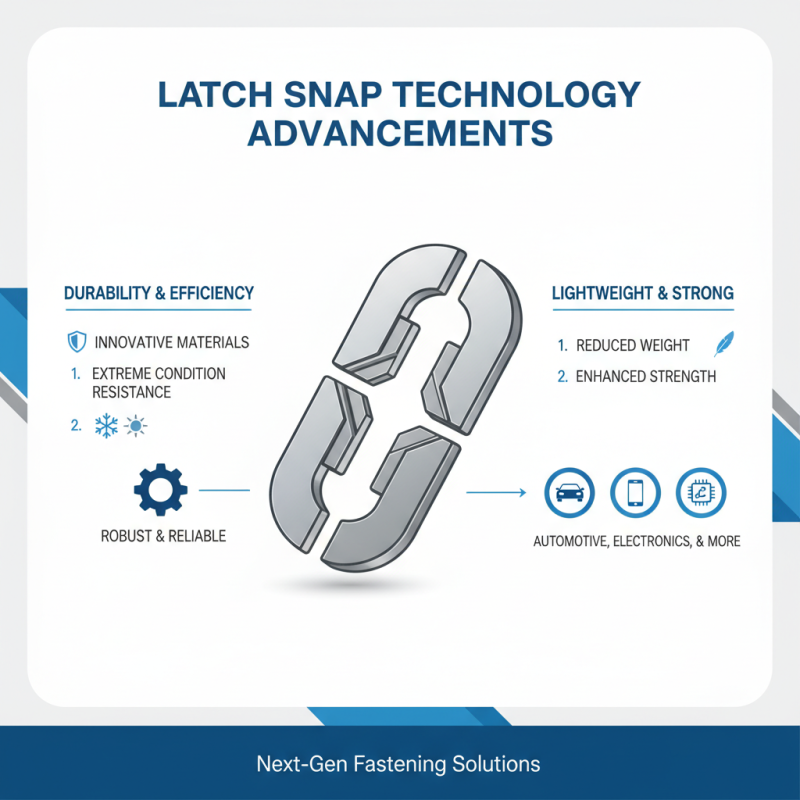
In recent years, latch snap technology has seen significant advancements. Manufacturers are focusing on creating more durable and efficient latch systems. This involves using innovative materials that can withstand extreme conditions. As a result, the new snap systems are both lightweight and robust. These enhancements cater to industries ranging from automotive to consumer electronics.
Sustainability is becoming a priority for manufacturers. There is a noticeable shift towards eco-friendly materials in latch production. This transition poses challenges, as finding the right materials can be tricky. Many companies are still experimenting to find the perfect balance between performance and environmental impact. Additionally, automation in production lines is on the rise. However, integrating new technologies comes with a steep learning curve.
The future of latch snap technology may also see more customization options. Customers might demand specific designs tailored to their needs. This could lead to longer lead times and increased complexity in production. Manufacturers must adapt and refine their processes to meet these evolving demands. There is still work to be done in understanding market trends and user preferences. The industry must be ready to pivot and rethink traditional approaches.
: The product is designed to enhance daily activities and improve overall efficiency.
Anyone looking for a convenient solution can benefit. It suits various lifestyles.
Follow the user guide closely. Practice regularly for better results.
Some users report initial difficulties. This often improves with practice and patience.
Regular cleaning is essential. Check for wear and tear frequently.
Yes, it is versatile. However, performance may vary depending on conditions.
Details vary by region. Check the documentation for more information.
Refer to the troubleshooting section in the manual. Common fixes are often simple.
Most manuals are available online. You can usually find a PDF version.
Yes, user feedback is valued. It helps improve future versions of the product.
The article explores the concepts of ODM (Original Design Manufacturer) and OEM (Original Equipment Manufacturer) in the context of latch snap components and their significant role in manufacturing. It highlights how these partnerships facilitate product development by allowing companies to leverage specialized expertise and enhance efficiency in the supply chain.
Additionally, the discussion emphasizes the importance of latch snap components in product design due to their functionality and reliability. Quality control standards for ODM and OEM latch snap suppliers ensure that products meet necessary specifications, contributing to overall product integrity. Furthermore, the article addresses future trends in latch snap technology, suggesting that advancements in manufacturing solutions will continue to shape the industry and improve component performance.