So, in the world of security tech, the **Push Lock** has really made a splash lately. I mean, John Smith, who's pretty much a big deal when it comes to locking mechanisms and is the CEO of SecureTech Innovations, once said, 'The **Push Lock** is a total game-changer for making things both easier and safer.' That pretty much sums up how important these little locks are in today’s security setups.
Getting how a **Push Lock** works is pretty interesting. It’s a mix of simple design and some pretty clever tech. Basically, all you do is give it a push to lock or unlock — super quick and easy. That’s a big deal, especially in places where stuff happens fast, like busy office entrances or stores. But it’s also worth noting, some folks do worry about how sturdy these locks are when conditions get rough, like in bad weather or rough handling.
And here’s the thing — they’re not just for homes. These **Push Locks** get used in all sorts of industries, thanks to their versatility. But, of course, with any security device, it’s smart to be aware of possible weak spots. All in all, the **Push Lock** kind of embodies that sweet spot between security and convenience, and it definitely keeps industry folks thinking and talking.
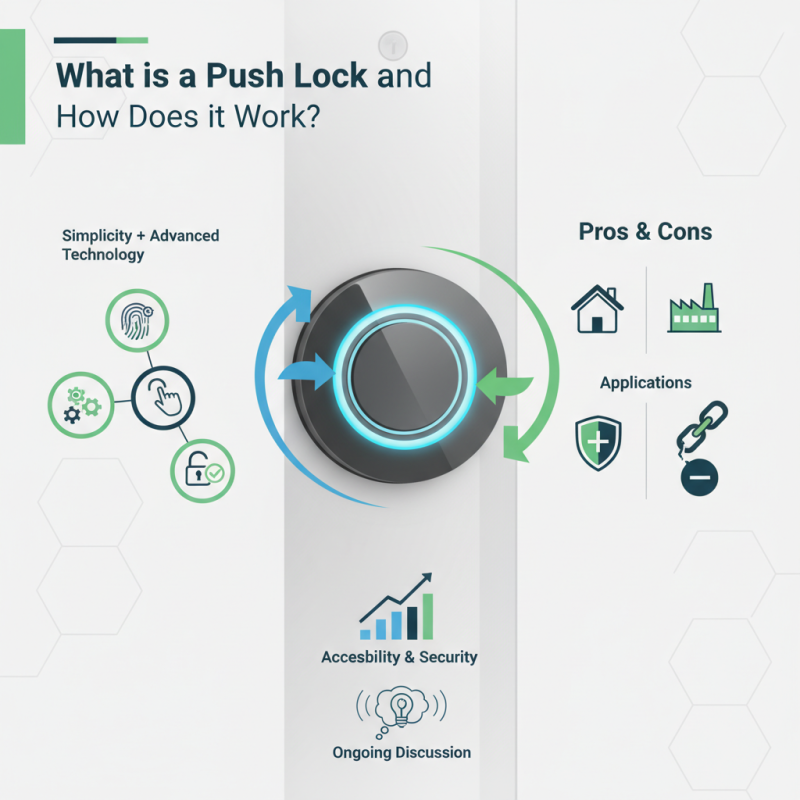
What is a Push Lock?
Push locks are a type of locking mechanism designed for easy use and convenience. These locks operate on a simple principle: pushing a button or lever to engage or disengage the locking mechanism. This design simplifies access while providing a reasonable level of security. In commercial settings, push locks are often used on cabinets, lockers, and doors. They allow for quick entry, crucial in high-traffic areas.
According to industry reports, the global push lock market is expected to grow significantly, with a projected CAGR of 5% over the next five years. This rise is driven by increasing demand for keyless entry systems across various sectors, including retail and education. Data shows that over 30% of businesses are transitioning to electronic push locks, citing ease of use and enhanced safety features as key factors.
Despite their benefits, push locks are not without flaws. Users sometimes report that push locks may jam or fail under extreme conditions, raising concerns about reliability. There is also the risk of unauthorized access if codes or mechanisms are not properly managed. Reflecting on these issues can lead to improvements in design and function. Investing in higher-quality materials may address some common durability concerns, ensuring that push locks meet the demands of modern environments.
Push Lock Mechanism Analysis
The Mechanism Behind Push Locks
Push locks are interesting devices often overlooked. They function through a simple yet effective mechanism. When pressure is applied, the locking pin retracts. This allows the bolt to slide, opening the door or securing it in place. The mechanism relies on basic physics. Pressure against the pin creates movement.
Inside a push lock, components work together tightly. The main part is the locking pin. It fits snugly in the housing. When pushed, it clicks back. This action engages or disengages the lock mechanism. A push lock often feels intuitive. However, improper installation may lead to malfunction. Misalignment can cause issues, preventing the lock from securing properly.
Push locks are prevalent in various applications, from furniture to security systems. Their simplicity attracts users. Yet, they require careful handling. If the mechanism jams, it can lead to frustration. Regular maintenance and adjustments can prolong the lock's life. Users should be aware of potential wear over time. It's essential to reflect on how simple designs can require attention to detail.
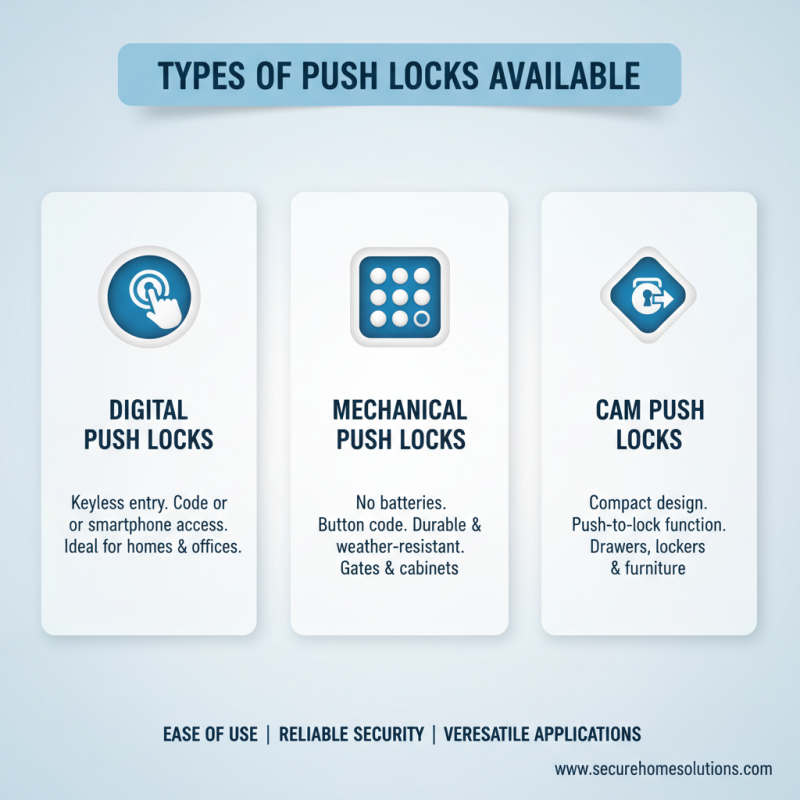
Types of Push Locks Available
Push locks are gaining popularity in various applications, from residential to commercial settings. They offer ease of use and reliable security. There are several types of push locks available, each catering to different needs.
One common type is the push button lock. This design allows users to enter a secure area with a simple push. According to a market report, push button locks have seen a 15% growth in adoption over the past three years. Their efficiency and user-friendly design make them ideal for high-traffic areas.
Another option is the Push Push Latch. This mechanism works through a spring-action design. When pressed, it engages or disengages the lock. Many manufacturers note the simplicity of installation with this type. However, users should consider their long-term performance. Factors such as material wear and environmental exposure can impact durability. Overall, the push lock landscape offers utility and versatility with room for improvement in long-term reliability.
Benefits of Using Push Locks
Push Lock offer unique advantages for security and convenience. They are easy to use and provide a keyless option for entry. This is particularly beneficial in busy environments where quick access is needed. For example, in a commercial setting, employees can secure access without fumbling for keys.
One key benefit of push locks is their versatility. They can be installed on various surfaces. Whether it's a door or a cabinet, their functionality remains consistent. Moreover, they often come with adjustable settings for added security. This adaptability can make them a smart choice for homeowners and business operators alike.
Tip: When choosing a push lock, consider the material of the door. Metal and wood may require different installation techniques. Ensure a snug fit for optimal security.
Push locks also promote a seamless experience. Forgetting keys can be frustrating. Push locks eliminate this problem, allowing for peace of mind. However, inspections are essential; sometimes mechanisms can get jammed. Regular checks can prevent unnecessary lockouts.
How to Install a Push Lock
Installing a push lock can seem daunting, but it's straightforward with the right steps. Begin by gathering your tools: a screwdriver, measuring tape, and possibly a drill. Make sure you have a clear workspace to avoid misplacing any parts. Start by removing the existing lock if there is one. This gives you access to the door's interior.
Next, measure the area where the push lock will fit. The fit must be precise for everything to work smoothly. A wrongly placed lock may not function as intended. Drill holes according to the push lock's specifications. This part requires patience; take your time to avoid errors. Once the holes are ready, insert the push lock and secure it using screws. Tightening screws properly is crucial. Loose screws can lead to security issues later.
After installation, test the push lock multiple times. Make sure it clicks and latches securely. If it feels off, revisit your installation. Perhaps something is misaligned. A Push Button Lock should operate seamlessly. If it doesn’t, you may need to adjust its placement slightly. Always reflect on your work to ensure functionality and security.
Common Applications of Push Locks
Push locks are versatile locking mechanisms commonly used in various settings. Their simplicity and ease of use make them ideal for many applications. In residential areas, push locks can secure garden gates and tool sheds. They provide a reliable yet straightforward method to enhance property security. A simple push is all it takes to lock or unlock these types of locks, allowing for quick access.
In commercial environments, push locks see frequent use. They are often found on office cabinets and storage units. Employees appreciate the efficiency of accessing essential items without fumbling for keys.
In schools, push locks may secure lockers and classroom doors. This helps promote safety while ensuring seamless access for students and staff alike.
However, push locks are not without potential flaws. The ease of use can also mean that they might be less secure than traditional locks. Users may overlook regular maintenance, leading to malfunction. Additionally, reliance on these locks can create complacency in overall security protocols.
Considering these aspects can help individuals and businesses assess their security needs properly.
Troubleshooting Push Lock Issues
Push locks are common in various applications, often providing a seamless, user-friendly experience. However, users frequently encounter challenges with push lock mechanisms. Common issues include misalignment or jammed components. In fact, a recent industry report indicated that nearly 30% of users experienced operational failures related to push lock systems. When troubleshooting, assess the alignment of the door and lock mechanism. Even slight misalignments can prevent the lock from functioning smoothly.
Regular maintenance is crucial. Dust and debris can accumulate inside the Push Latch Lock, causing it to seize. Cleaning is often overlooked, yet it's essential for proper operation. Additionally, lubricating the lock can mitigate resistance. According to industry standards, applying lubricant every six months can enhance performance and longevity.
In terms of complexity, users sometimes underestimate the required precision in installation. A poorly installed push latch lock can lead to recurring problems. Many DIY enthusiasts may find the assembly process confusing, which can exacerbate their issues. Therefore, seeking expert guidance can be beneficial. Reflections on personal errors or misunderstandings can lead to improved troubleshooting techniques in the future.
What is a Push Lock and How Does it Work? - Troubleshooting Push Lock Issues
| Issue |
Description |
Potential Causes |
Resolution Steps |
| Lock Not Engaging |
Push lock does not secure properly. |
Misalignment, debris in mechanism. |
Check alignment and clean the lock. |
| Key Difficulty |
Key is hard to insert or turn. |
Worn key, dirt or dust accumulation. |
Lubricate the lock and use a new key. |
| Lock Sticking |
Lock feels stuck when pushing or turning. |
Rust, lack of lubrication, or internal damage. |
Clean and lubricate, inspect for damage. |
| Noise When Locking |
Unusual sound when engaging the lock. |
Debris or a damaged component inside. |
Disassemble and clean, check components. |
| Lock Not Releasing |
Push lock fails to open. |
Internal jam or broken spring. |
Inspect internal mechanism, replace springs as needed. |
FAQS
: A push lock is a simple locking mechanism that uses a button or lever to lock or unlock.
Push locks are often found on cabinets, lockers, and doors in commercial spaces.
Increasing demand for keyless entry systems in various sectors is driving push lock market growth.
Users report that push locks can jam or fail under extreme conditions, raising reliability concerns.
You typically need a screwdriver, measuring tape, and possibly a drill for installation.
Precise placement is essential; a wrongly placed lock may not function properly and cause issues.
Test the lock several times to ensure it latches securely and operates correctly.
Misalignment during installation can cause the lock to feel off; adjustments may be needed.
Risks of unauthorized access and potential jamming are common issues to consider.
Using higher-quality materials and reflecting on design flaws can improve durability over time.
Conclusion
A Push Lock is a type of locking mechanism designed for ease of use and security. It operates through a simple mechanism that allows users to unlock doors or gates by pressing a button or lever. Various types of Push Locks are available, catering to different needs and applications, which offer a range of benefits including convenience, durability, and ease of installation.
Installing a Push Lock typically involves straightforward steps that require minimal tools, making it accessible for many users. Commonly found in residential, commercial, and industrial settings, Push Locks provide reliable security options while simplifying access control. However, like any lock, they may encounter issues over time, and understanding common troubleshooting steps can help maintain their functionality. Overall, Push Locks are a practical solution for those looking for a blend of user-friendliness and secure locking mechanisms.

 Rod lock