
 Rod lock

What Cabinet Hinges Do and Why They Matter
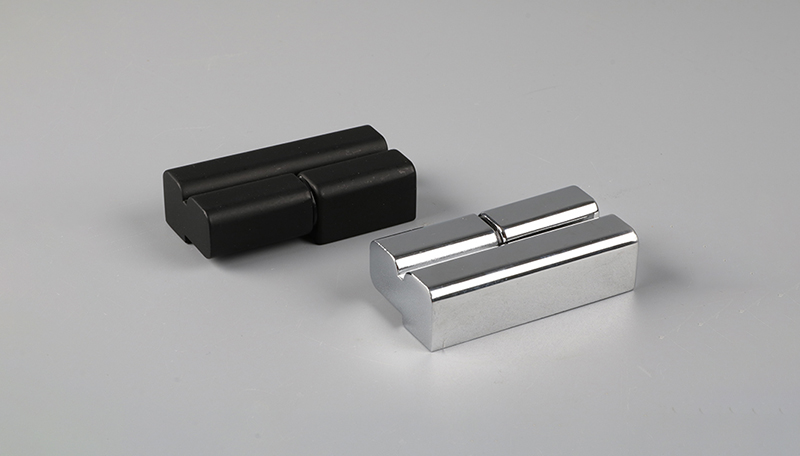
Cabinet hinges are the mechanical pivots that attach a door to a cabinet frame and control how it opens, closes, and sits when shut. They are not just connectors; they determine the swing angle, the door's alignment with adjacent doors, and whether the door stays closed or drifts open. A well-chosen set of cabinet hinges makes a row of enclosure doors look uniform and operate smoothly. A poorly matched or cheaply made hinge leads to sagging doors, uneven gaps, gasket compression problems, and eventually a door that must be lifted or forced to latch.
Where cabinet hinges are used
Cabinet hinges appear far beyond kitchen cabinetry. Industrial control panels and electrical enclosures need hinges that carry heavy steel doors full of devices and wiring while maintaining the IP seal. Server racks require wide swing angles for cable access. Medical cabinets need quiet operation, chemical resistance, and precise alignment for locks. Outdoor telecom and roadside enclosures demand corrosion resistance through years of rain, salt, and temperature swings. Food and pharma facilities use stainless steel hinges that tolerate washdowns and leave no contamination traps. Vending machines and kiosks rely on hinges that survive thousands of cycles without loosening or squeaking. In every setting, the hinge decides whether a door works or becomes a daily frustration.
Key features that separate quality cabinet hinges from basic ones
- Material and corrosion resistance:Stainless steel handles outdoor, marine, and washdown environments without rust. Zinc-plated steel works indoors at lower cost. For food or pharma applications, 316 stainless with added molybdenum resists aggressive cleaning chemicals.
- Load capacity and door weight:A hinge rated for light sheet metal will sag under a heavy, instrument-loaded door. Match the hinge pair's maximum load rating to the fully equipped door weight, not the bare door.
- Adjustability:Built-in adjustment screws let installers fine-tune door position in three directions after mounting, correcting misalignment without elongating holes or shimming. Essential when multiple doors must align perfectly.
- Sealing compatibility:On IP-rated enclosures, the hinge must work with the gasket. Some designs pull the door into the gasket during closing, improving the seal without excessive latch force.
- Fixed pin versus removable pin:Removable-pin hinges let the door lift off without unscrewing, speeding up panel work and equipment access. Fixed-pin designs are simpler and cheaper for doors rarely removed.
Common hinge types and where they fit
- Concealed hinges:Hidden when the door is closed for a clean look. Common on office furniture, retail displays, and high-end enclosures. Offer three-way adjustability but lower load capacity than exposed designs.
- Continuous hinges:Also called piano hinges, these run the full door height and spread load evenly along the edge. Ideal for heavy doors on industrial and outdoor cabinets where sagging would break the seal.
- Weld-on hinges:Welded directly to the frame and door for a permanent, high-strength connection. Suit large enclosures, trailer-mounted cabinets, and heavy fabricated doors. Restore the finish after welding to prevent corrosion.
- Surface-mount hinges:The most common type for electrical enclosures and industrial cabinets. Screw onto the outside face, install quickly, and replace easily. Available in multiple materials and load ratings.
- Lift-off hinges:Allow the door to lift off when open, speeding up panel work and equipment installation. Standard on many industrial enclosures where doors are removed during build and reinstalled later.
Common mistakes when ordering cabinet hinges
Don't underestimate door weight. Every instrument, operator interface, and internal component adds to the load. Calculate the fully equipped door weight and match the hinge rating to that figure not the bare door.
- Ignoring gasket compression:A soft gasket pushes back against the door with constant force. Hinges on gasketed enclosures need extra load margin to resist this outward pressure without sagging over time.
- Mixing hinge types on the same door:Different pivot points or clearances cause binding and uneven gaps. Always replace hinges in matched sets from the same manufacturer and series.
- Forgetting finish compatibility:Stainless steel on an aluminium door creates a galvanic corrosion pair in damp or salty conditions. Match the hinge material to the door and frame, or use isolating washers if mixing can't be avoided.
How to select the right cabinet hinges
Start with the door: its fully loaded weight with all installed components, its material, thickness, and any gasket present. For replacements, measure the existing mounting hole spacing and edge distance. Determine the required swing angle based on adjacent walls and cabinets, and decide if the door needs lift-off capability. Then match the hinge material to the environment zinc-plated steel for dry indoor spaces, stainless steel for outdoor, coastal, or washdown areas, and smooth crevice-free stainless for food or pharma sites where cleaning chemicals are used. Finally, consider cycle life: a vending door opened fifty times a day demands high-cycle hinges with durable bearings, while a monthly inspection door has far lighter needs.
Summarize
A cabinet hinge is overlooked until a door sags, scrapes, or loses its seal by then, the enclosure's protection rating, door alignment, and perceived quality have already suffered. Getting the load rating, material, swing angle, and adjustability right at procurement costs little more than a generic choice but prevents years of field issues. For panel builders, enclosure manufacturers, or maintenance buyers, the right hinges mean doors that swing smoothly, align neatly, and keep the interior protected exactly the quiet, predictable performance good hardware delivers.
